ARCH
TECTURE

Cultural Center Burgas

Competition
Burgas Park zone 3, Bulgaria

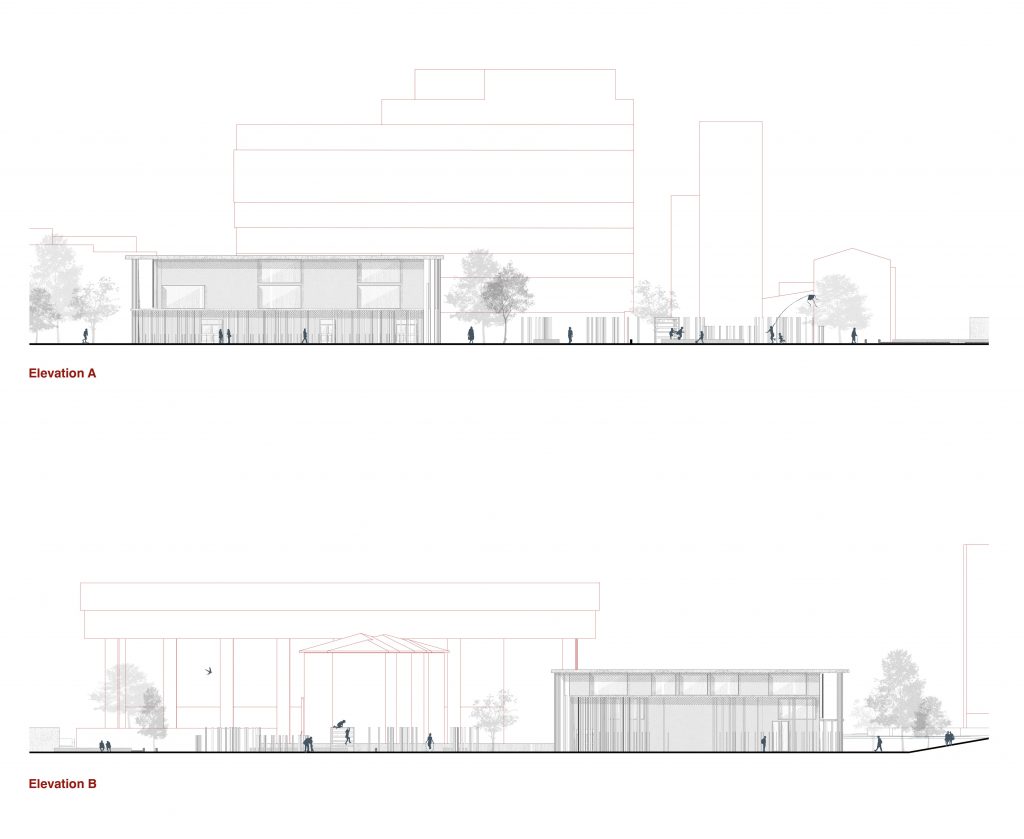
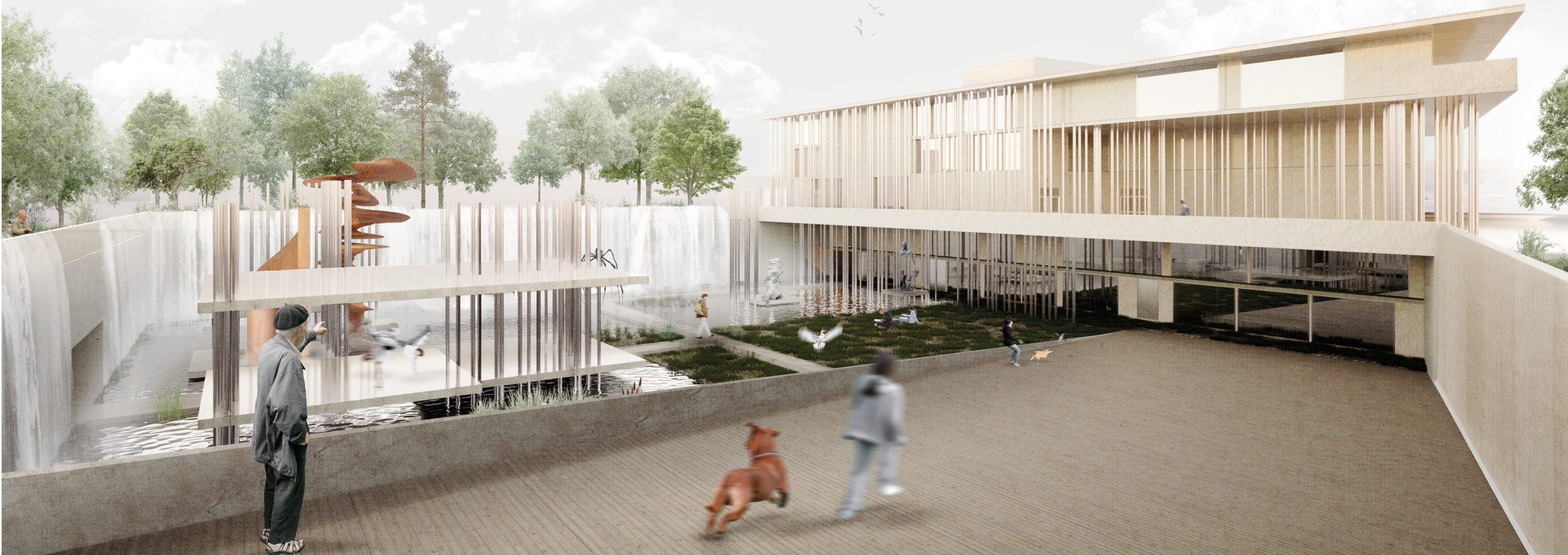
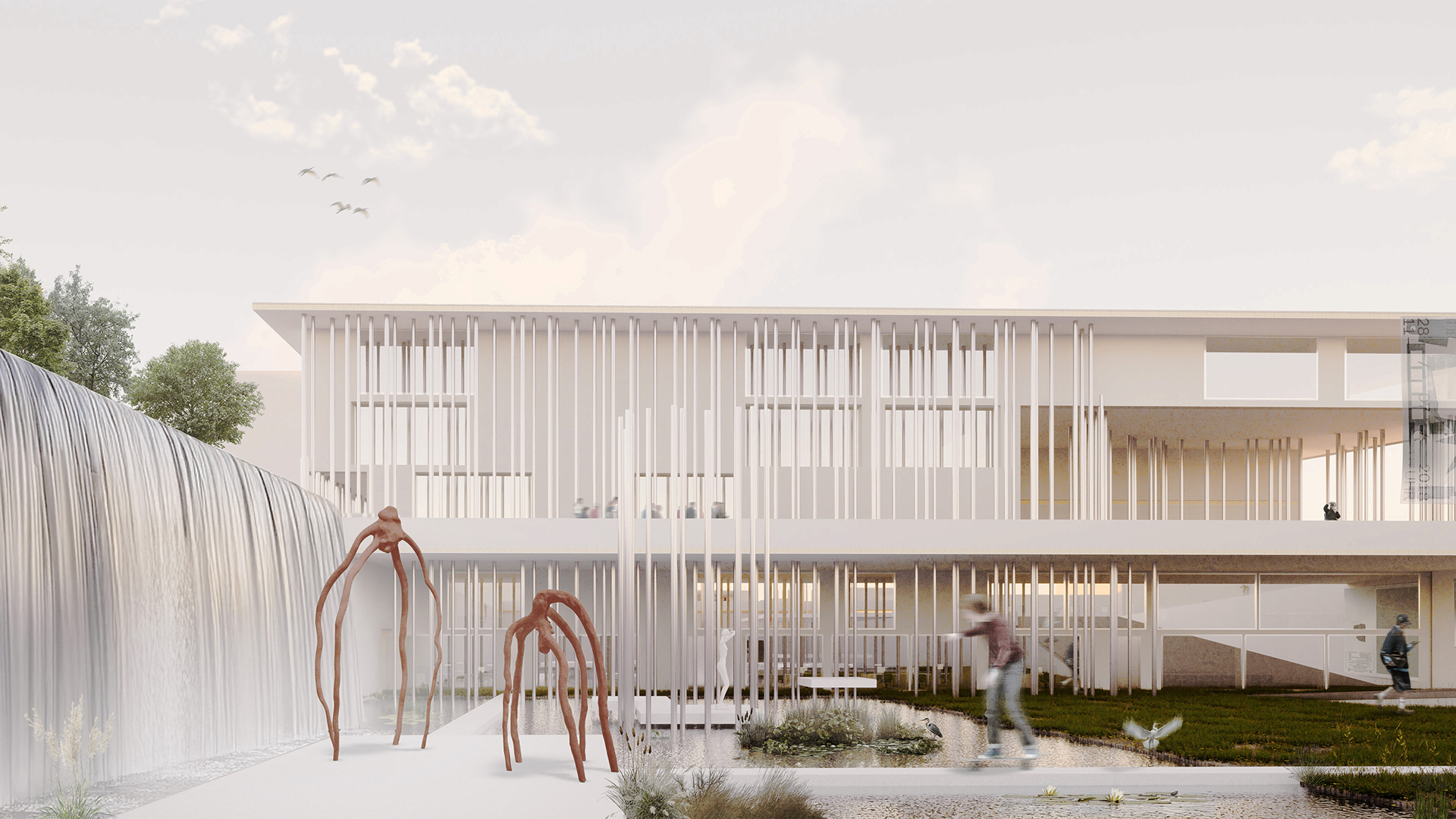
The project begins with the recognition of ‘The Hole’ at the centre of Burgas. It is not a problem to erase, but a spatial condition capable of shaping new public life. Instead of replacing the void, the proposal works with its depth, transforming it into a civic ground where cultural spaces and open landscape operate as one system.

Architecture and environment are treated as a shared infrastructure – accesible, flexible, and open to multiple forms of use over time. By reintroducing water, vegetation and access for gathering, the site becomes a place for the city to meet, rest and express itself. It is not a new object inserted into Burgas, but a new layer added to its urban story – turning an absence into a collective asset.

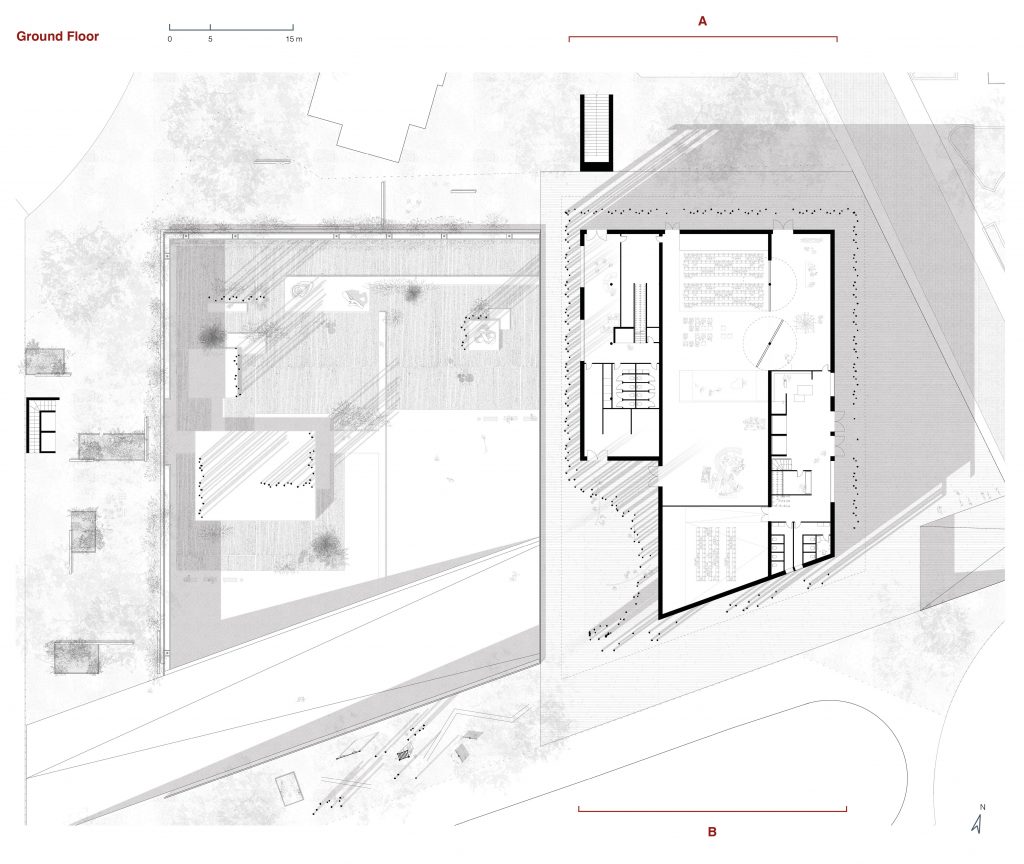
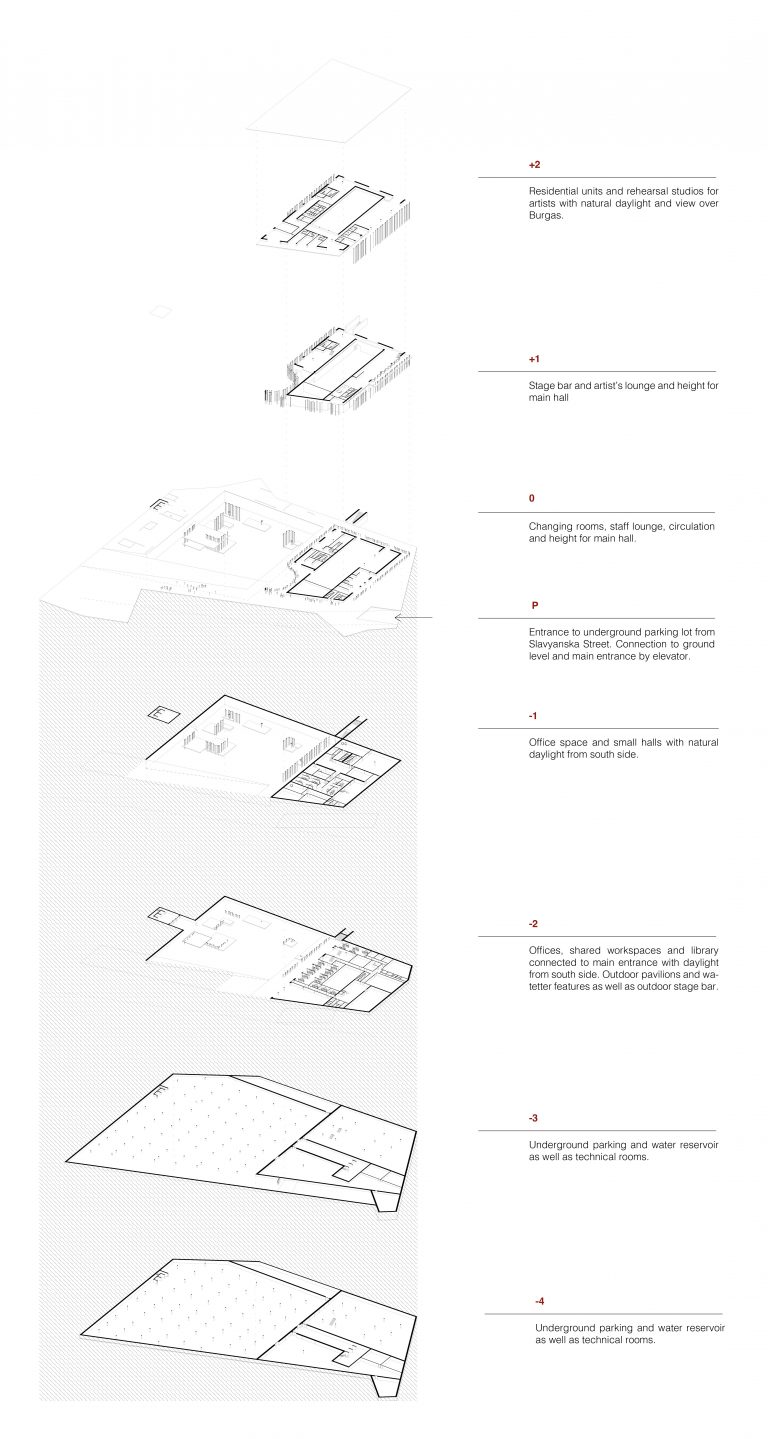
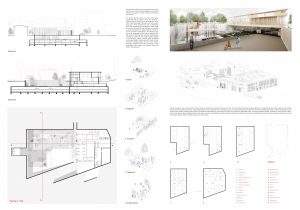
The concept is organized around two parallel circulation axis, derived from abstract movement lines across the site. One axis strctures above ground circulation, guiding access through the building volumes. In parallel, a wide, continuous slope connects directly to the underground levels, separating access to the main building functions from the independent ramp serving underground parking. Together, these layered routes clarify movement, enhance safety, and translate urban desire paths into a coherent spatial system. 

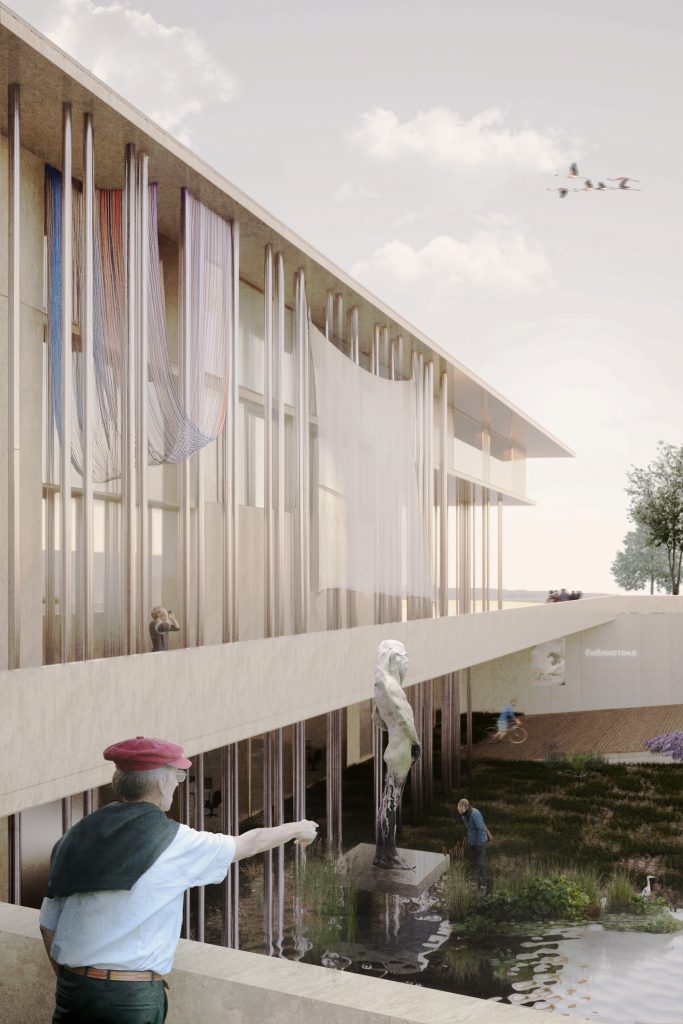
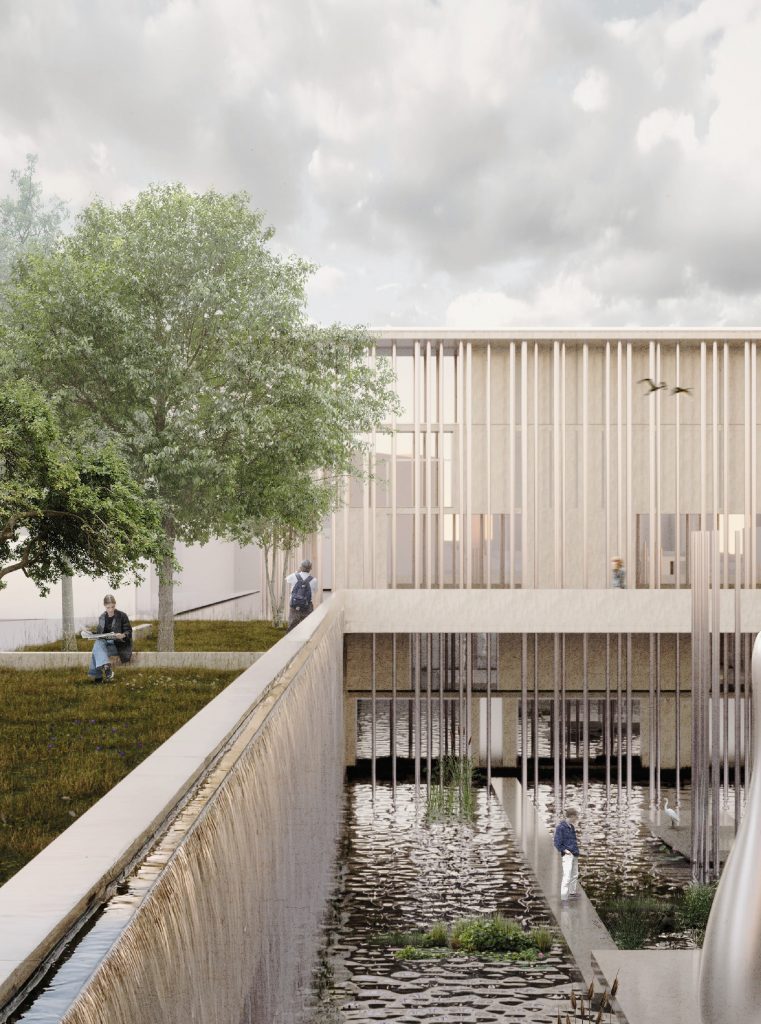
The landscape strategy partially preserves the existing concrete walls, transforming them into linear water features. Beyond their spatial role, these elements contribute to passive cooling, mitigating overheating while enriching the outdoor experience with sound, movement, and microclimate control. Moreover, the shallow water surface is divided by slabs that serve as pathways and can be used as a walk through to statues and on-going exhibitions.

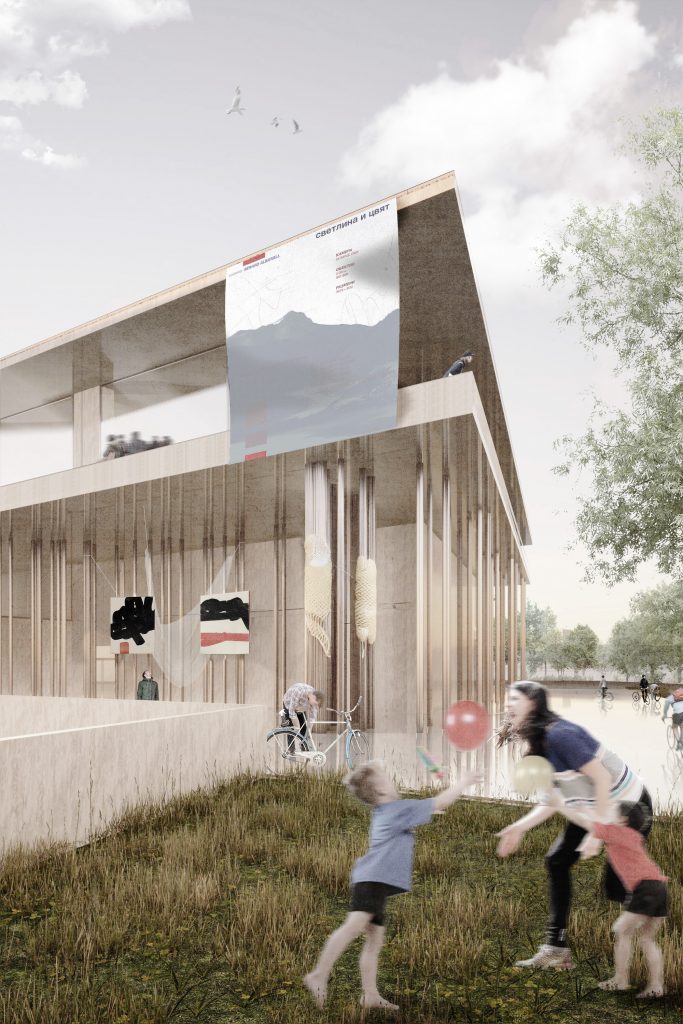
Movement across the site is organised as an open and inclusive network that strengthens connections between the park, the water, and the surrounding urban fabric. The Shared garden acts as the main entry space, supporting free circulation while also offering a sensory walk for slower, more contemplative movement. Paths lead toward the water veil and outdoor satge bar, which functions as both a destination and a social gathering point along the water edge.

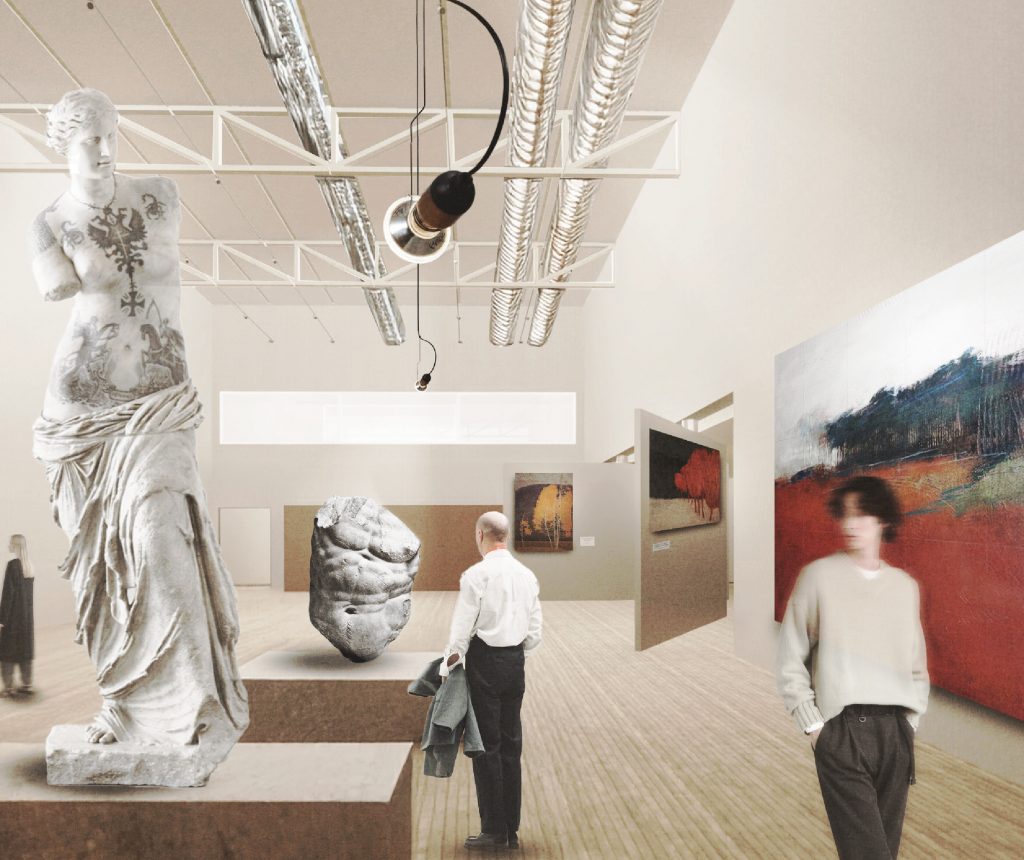
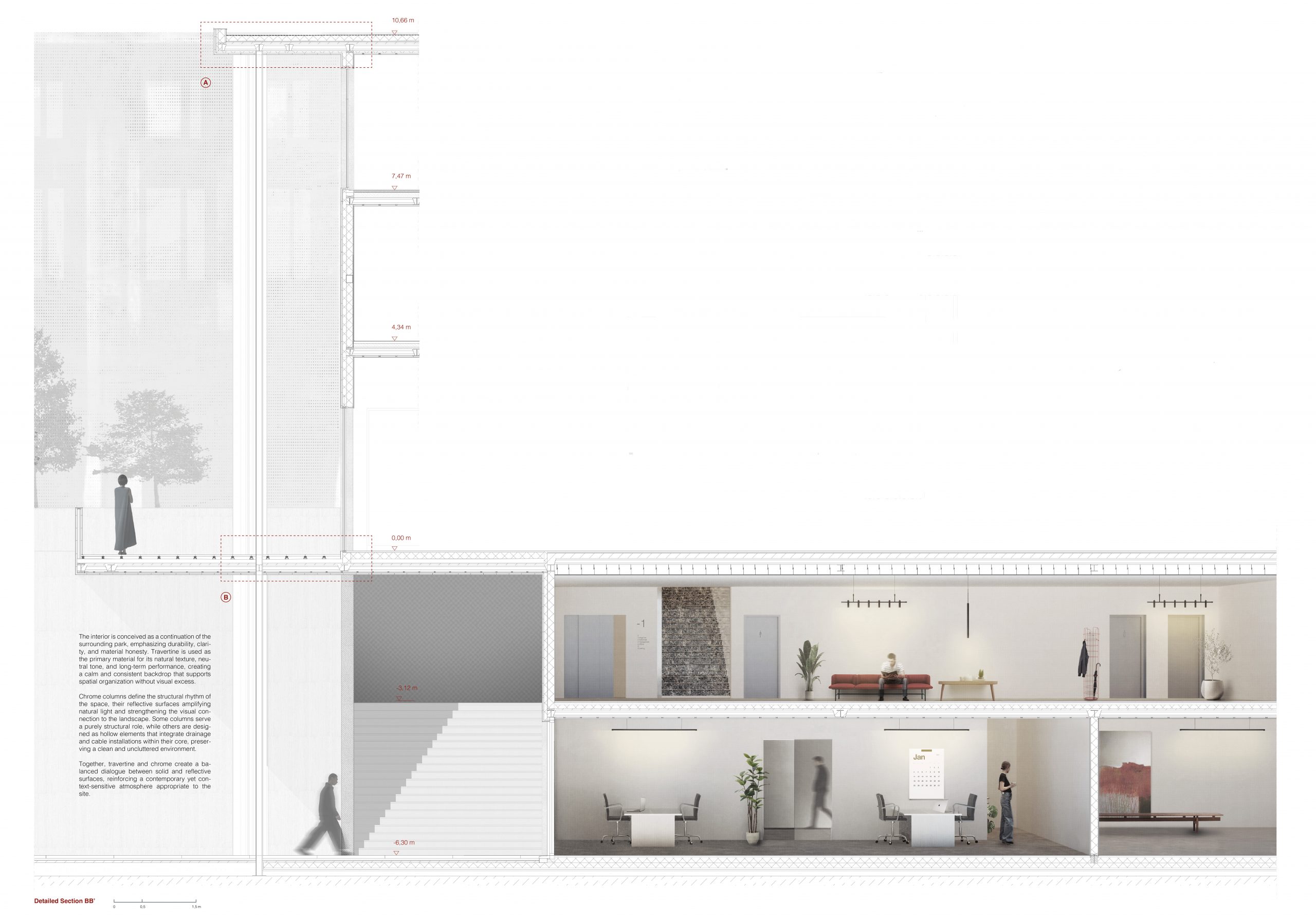
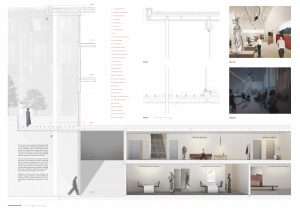
The interior is conceived as a continuation of the surrounding park, emphasizing durability, clarity, and material honesty. Travertine is used as the primary material for its natural texture, neutral tone, and long-term performance, creating a calm and consistent backdrop that supports spatial organisation without visual excess.

Chrome columns define the structural rhythm of the space, their reflective surfaces amplifying natural light and strengthening the visual connection to the landscape. Some columns serve a purely structural role, while others are designed as hollow elements that integrate drainage and cable installations within their core, preserving a clean and uncluttered environment.

Together, travertine and chrome create a balanced dialogue between solid and reflective surfaces, reinforcing a contemporary yet context-sensitive atmosphere.

Designed by: Edoardo Ferrari, Ain Haesendonck

Organised by: Burgas Municipality