ARCH
TECTURE

urban Toilet

Competition
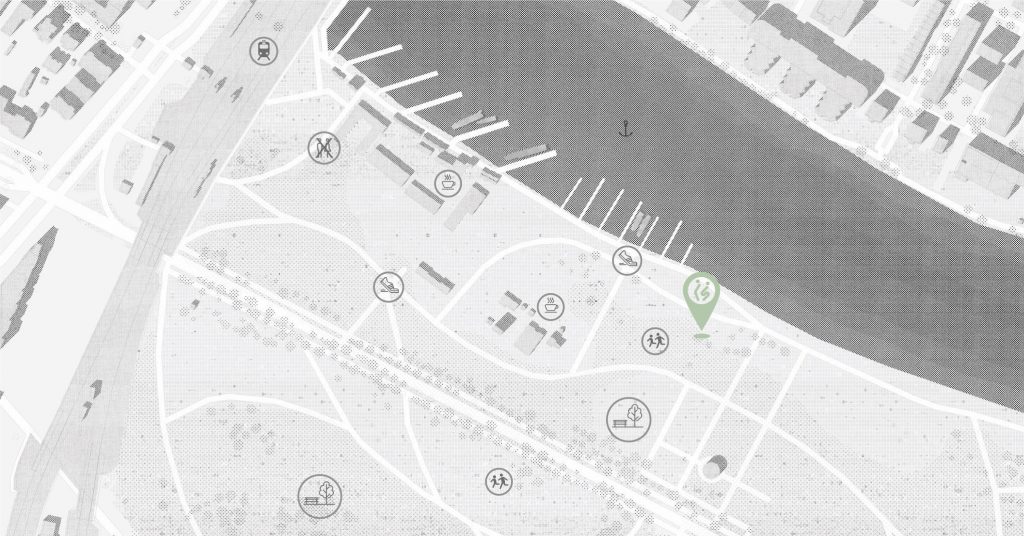
Berlin, Germany

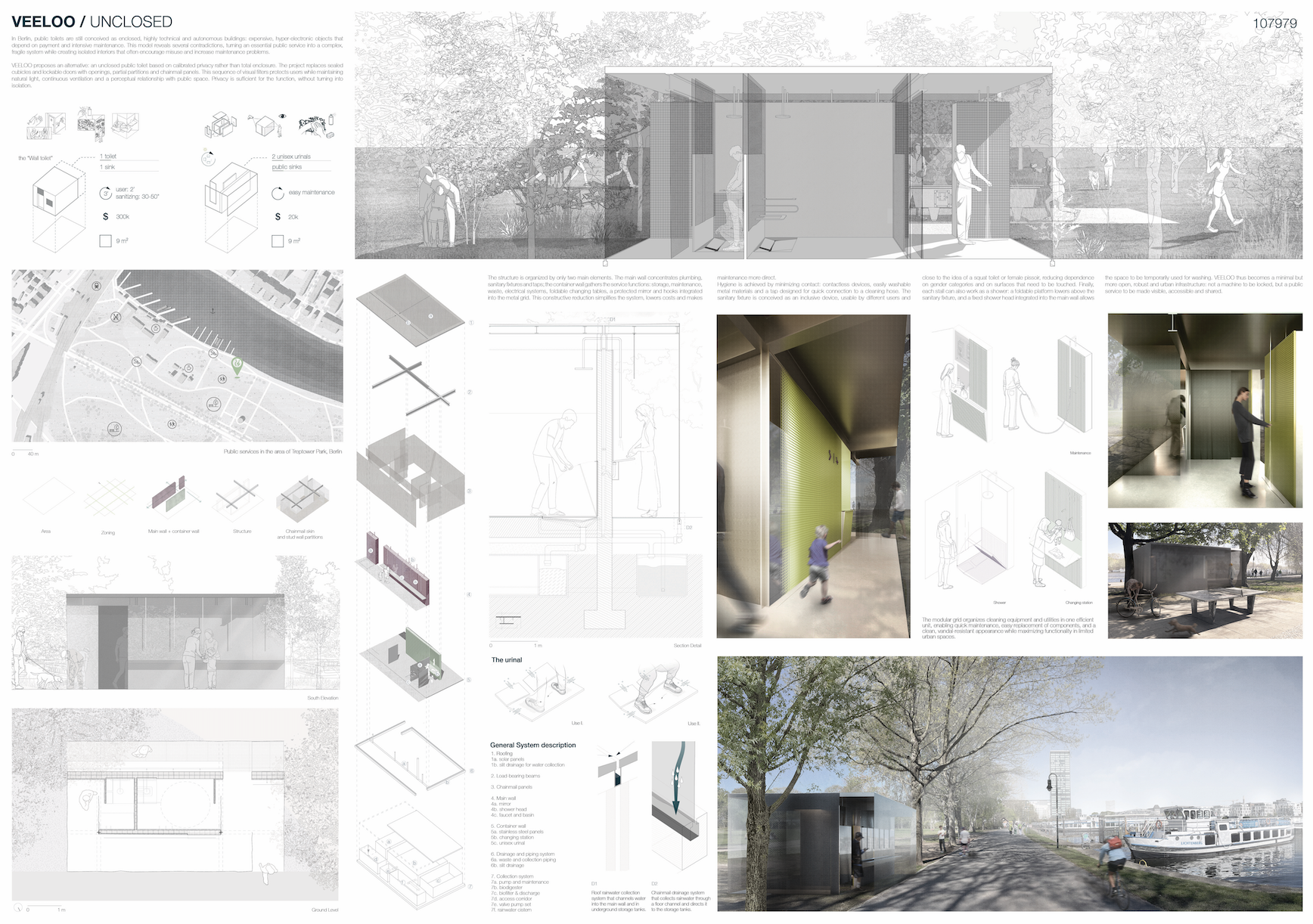
In Berlin, public toilets are still conceived as enclosed, highly technical and autonomous buildings: expensive, hyper-electronic objects that depend on payment and intensive maintenance. This model reveals several contradictions, turning an essential public service into a complex, fragile system while creating isolated interiors that often encourage misuse and increase maintenance problems.

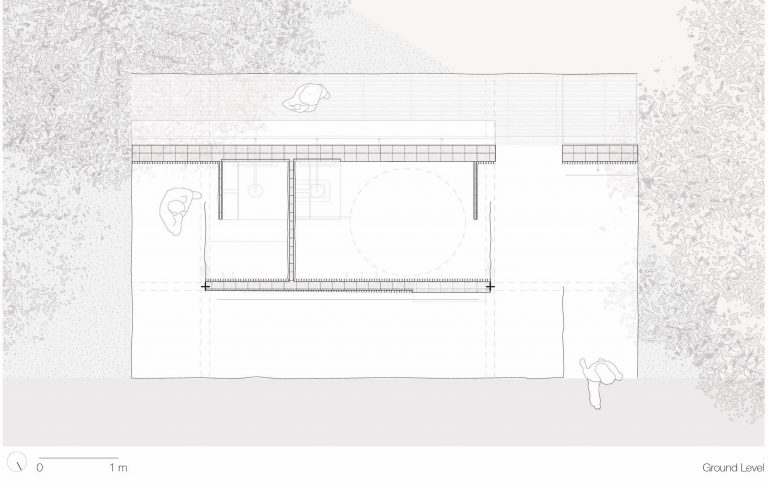
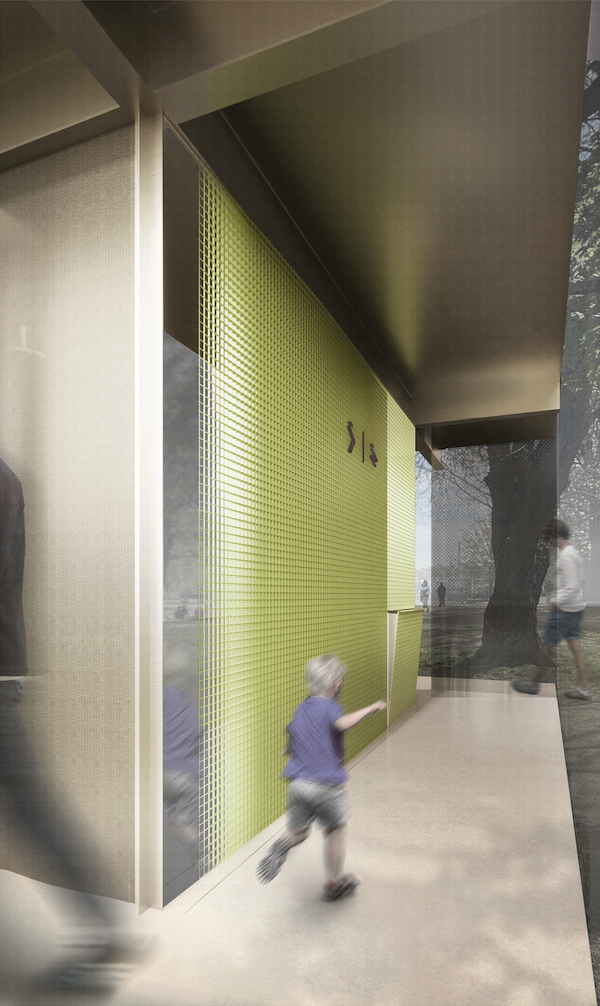
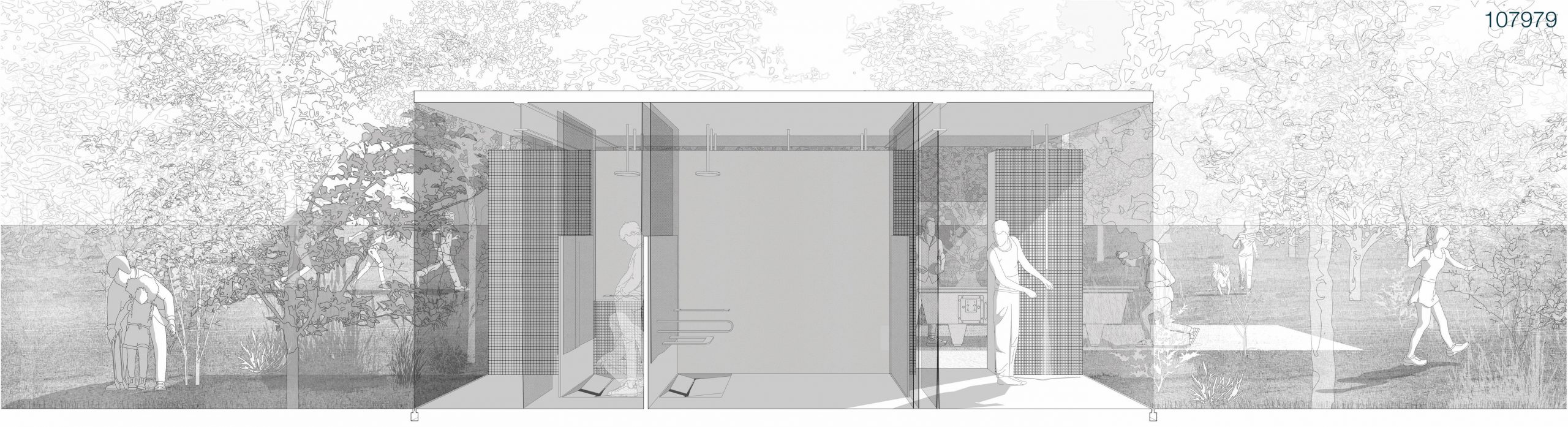
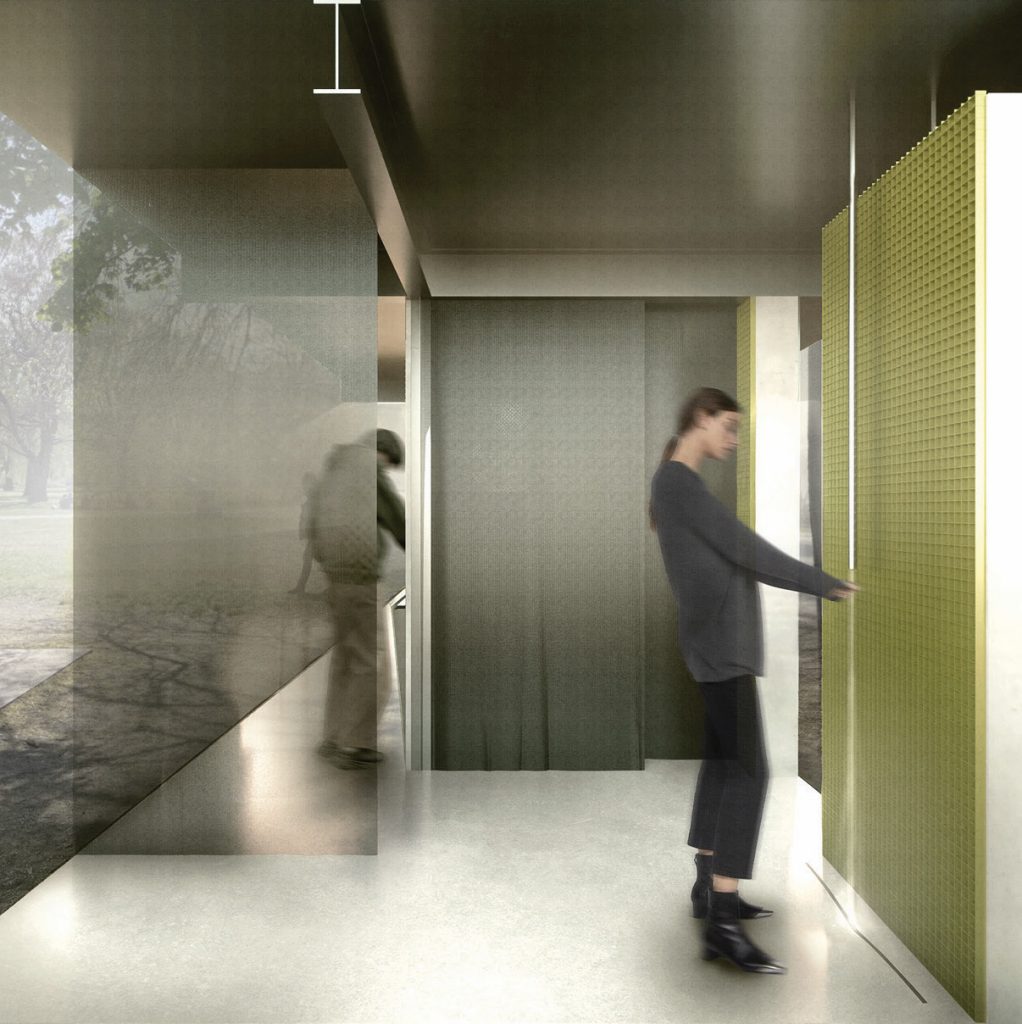
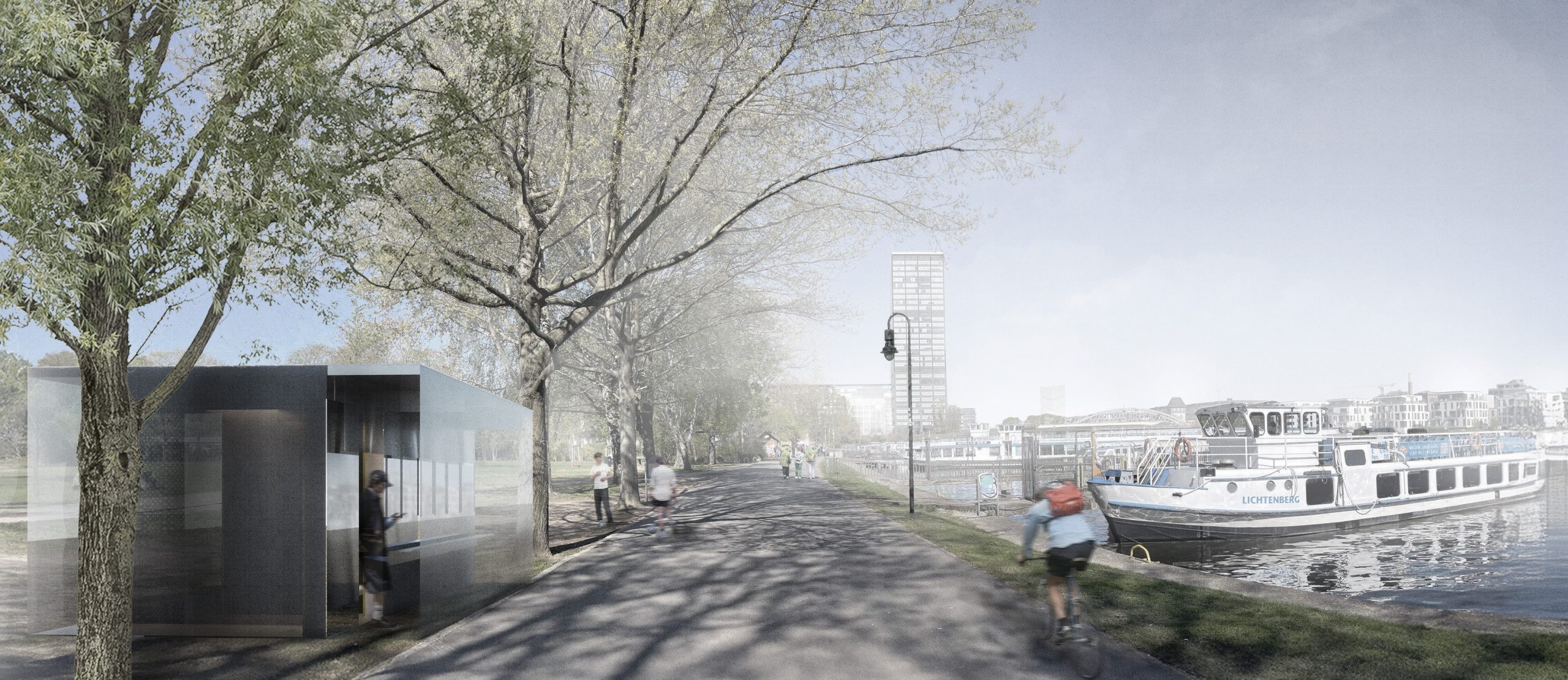
VEELOO proposes an alternative: an unclosed public toilet based on calibrated privacy rather than total enclosure. The project replaces sealed cubicles and lockable doors with openings, partial partitions and chainmail panels. This sequence of visual filters protects users while maintaining natural light, continuous ventilation and a perceptual relationship with public space. Privacy is sufficient for the function, without turning into isolation.

 

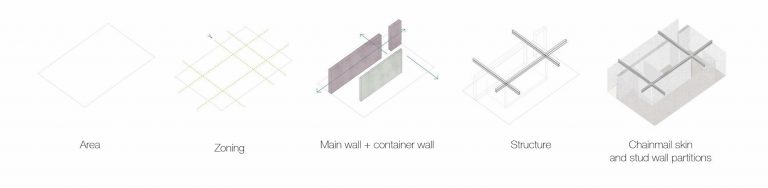
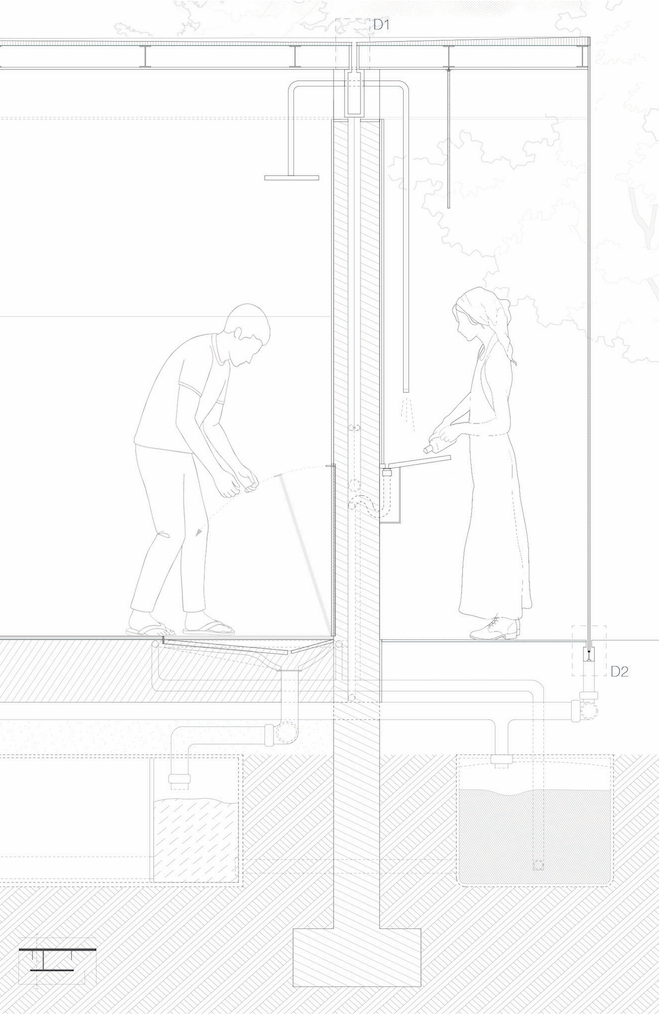
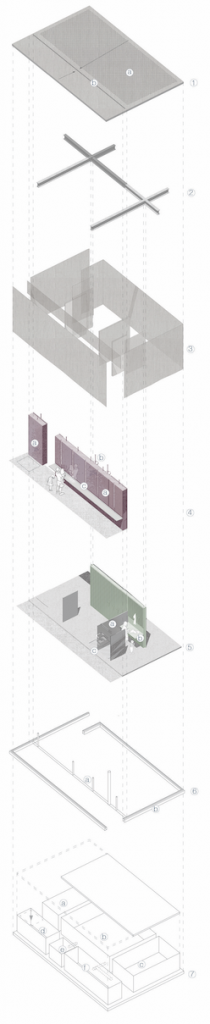
The structure is organised by only two main elements. The main wall concentrates plumbing, sanitary fixtures and taps; the container wall gathers the service functions: storage, maintenance, waste, electrical systems, foldable changing tables, a protected mirror and hooks integrated into the metal grid. This constructive reduction simplifies the system, lowers costs and makes maintenance more direct.

Hygiene is achieved by minimizing contact: contactless devices, easily washable metal materials and a tap designed for quick connection to a cleaning hose. The sanitary fixture is conceived as an inclusive device, usable by different users and close to the idea of a squat toilet or female pissoir, reducing dependence on gender categories and on surfaces that need to be touched.


Finally, each stall can also work as a shower: a foldable platform lowers above the sanitary fixture, and a fixed shower head integrated into the main wall allows the space to be temporarily used for washing.

VEELOO thus becomes a minimal but more open, robust and urban infrastructure: not a machine to be locked, but a public service to be made visible, accesible and shared.

The modular grid organizes cleaning equipment and utilities in one efficient unit, enabling quick maintenance, easy replacement of components, and a clean, vandal-resistent appearance while maximizing functionality in limited urban spaces.

Designed by: Edoardo Ferrari, Ain Haesendonck

Organised by: Terraviva Competitions